A Home Should Feel Like You
A beautiful home can impress visitors, photograph well, and follow every design trend, yet still feel strangely uncomfortable.The largest and most expensive homes are not always the most memorable. They are the ones who greet you at the end of a long day, ease you into routines, and hold the intimate details that tell your story. That is the heart of a cozy home. It is not a specific color scheme, style of furniture, or shopping list. It is the feeling created when beauty, function, sensory comfort, and personality work together. Good interior design does not ask you to choose between a stylish home and a comfortable one. With thoughtful modern interior design, you can create rooms that are contemporary, practical, warm, and unmistakably yours.
How to create a cozy home from the inside out is the topic of this guide. We will look at planning, furniture, layout, colour, lighting, materials, textiles, storage, personalisation, plants, technology, and room-by-room ideas. Additionally, you will find useful recommendations for households with limited space, apartments, rented homes, and busy households. The goal is not to copy a showroom. The goal is to understand what makes you feel at ease and translate that feeling into your surroundings.
What Gives a Home Its Coziness? Cozy is often confused with cluttered, rustic, dark, or overly decorated. None of those characteristics is necessary. A modern apartment with clean lines can feel deeply cozy. A compact home with very little furniture can feel warmer than a large house packed with decorative objects.
Comfort usually comes from several layers working at once:Physical comfort includes seating that is supportive, comfortable temperatures, useful lighting, and surfaces that are pleasant to the touch.
- Visual comfort: balanced proportions, calm colour relationships, and enough negative space for the eye to rest.
- Comfort for the emotions: things that are familiar, important memories, and design choices that reflect the people who live there. Practical comfort: storage that works, clear walkways, convenient switches, and furniture arranged around real habits.
- Comfort for the senses—appropriate sound, scent, texture, lighting, ventilation, and a connection to nature—is essential. This broader view is important because a room can look cozy while failing in daily use. A sofa may be attractive but too shallow for relaxing. A bedroom may have lovely styling but harsh lighting. Even though a kitchen appears to be small, there is nowhere to put a hot pan or breakfast cup. The strongest interior design begins with questions rather than purchases. How do you enter the home? Where do bags and shoes go? Do you read, watch films, work, host friends, cook, exercise, or spend time with children? Which corners are utilized naturally and which remain unoccupied? Your answers reveal the design your home actually needs.
Before choosing paint colours or browsing furniture, write a short comfort brief. This is a simple description of the atmosphere and behaviour you want each area to support.
For instance:
- “The living room should feel relaxed, sociable, and easy to reset after dinner.”
- The bedroom should be quiet, comfortable, and free of work-related distractions.
- “The entryway should help everyone leave quickly in the morning.”
- “The balcony should become a small evening retreat.”
Now make a list of the things that matter the most. In a modern home, a room rarely serves a single purpose. You could use your living room as a place to read, work from home, play, or eat. Instead of forcing it into a single identity, design clear zones that can share the room without competing.
Before you buy, test it out. Measure the room, doorways, lift, stairwell, windows, radiators, switches, sockets, and built-in storage. Record the measurements in a simple floor plan. Mark the direction of door swings and the path people naturally take through the room.
For two or three days, notice what you do automatically. Where do you drop your keys? Where do you enjoy your tea? Which lamp do you first turn on? Do you move cushions to create a place for a laptop? Do you carry a blanket from another room?
These small inconveniences are valuable design clues. Add a side table if you frequently require one. If you always search for a charger, create a charging station. If the best reading light is across the room, move the light rather than blaming yourself for poor habits.
Choose a mood, not a trend
Trends can be a source of inspiration, but they are not personalities. Choose three to five words to describe the desired state, such as tranquil, jovial, earthy, bright, calm, collected, airy, intimate, or refined. Use these words to evaluate each design choice. If “calm” is one of your words, you may prefer fewer competing patterns. If “playful” matters, introduce colour through art, cushions, or a painted niche. If your ideal is “collected,” mix and match old and new pieces rather than purchasing a matching set. The Modern Interior Design Approach to Coziness
Modern interior design is often associated with minimalism, neutral colours, smooth surfaces, and uncluttered rooms. Those features can support comfort, but modern does not have to mean cold. The warmth comes from proportion, material selection, lighting, and the evidence of real life.
A cozy modern room might combine: clean architectural lines with rounded or generously padded furniture; a restrained base palette with expressive artwork; hidden storage with a few displays that are visible; natural timber, woven fibres, stone, ceramic, or handmade finishes; simple forms with varied tactile surfaces; technology that is useful but visually controlled; balanced between open space and intimate seating areas.
The key is contrast. If every surface is hard and reflective, the room may feel echoing and impersonal. If every surface is soft, patterned, and filled, it may become visually tiring. Combine contemporary with personal, light with shadow, smooth with rough, open with enclosed, and light with shadow. Use the 70–20–10 colour rhythm
A practical way to build a palette is to assign approximate roles rather than obsess over exact percentages:
Dominant colour: walls, large cabinetry, or the main upholstery. rugs, curtains, secondary furniture, or bedding are examples of supporting colors. Accent colour: art, ceramics, cushions, flowers, or a single painted feature.
The proportions do not need to be mathematically exact. The point is to create hierarchy. When the eye can distinguish between what is most important, what supports it, and what requires attention, a room feels calmer. Neutrals are not limited to white, grey, and beige. As calm foundations, warm clay, muted olive, sand, mushroom, dusty blue, soft terracotta, and creamy off-white can all be used. Test samples in morning, afternoon, and evening light because colour changes dramatically throughout the day.
Add character through controlled irregularity
Perfectly matched furniture can make a room feel like a catalogue. Controlled irregularity creates life. Try pairing a contemporary sofa with a vintage side table, modern dining chairs with a handmade pendant, or a clean-lined bed with patterned woven cushions.
The space ought to feel connected, not distinct. Repeat one or two elements—perhaps a wood tone, accent color, or metal finish—so that the variety feels deliberate. Plan Furniture Around the Body
An interface between your body and your home is provided by furniture, which is more than just an item in a room. Height, depth, support, reach, movement, and posture all affect comfort. Select a sofa for your actual home. A seat with a moderate depth might be ideal if you mostly talk and sit upright. If you stretch out for films, look for more generous depth or add a chaise. Check the height of the back, the firmness of the cushions, the arm height, and how easy it is to stand up.
Do not judge a sofa only by its showroom appearance. Lie down on it for a while. Imagine reading, napping, speaking with someone, and standing up while holding a cup. Removable, washable covers can be especially useful for children, pets, or frequent entertaining.
Create a conversation arrangement
Instead of pushing every piece against the wall, consider bringing seating slightly inward. A sofa and two chairs arranged around a rug or coffee table often feels more welcoming than furniture lined along the perimeter.
Leave enough space for people to move naturally. A living room should not require someone to squeeze behind a chair every time they cross the room. The exact clearance depends on the furniture and household, but the principle is simple: prioritise an easy path before adding another piece.
Keep useful surfaces easily accessible. Comfort improves when everyday objects have a landing place. Place a small table next to the reading chair, a console near the door, or a small shelf next to the bed. A surface does not need to be large to be useful. It only needs to hold what you actually use: a lamp, phone, book, drink, glasses, or remote.
Select multifunctional pieces carefully
Multifunctional furniture is valuable in compact homes, but flexibility should not sacrifice comfort. A storage ottoman can act as a footrest, seat, and hidden storage. A sofa bed can serve guests, but test both its sitting and sleeping functions. A nesting table can expand when friends visit and disappear when the room needs more floor space.
Choose pieces that solve a real problem rather than buying transformable furniture simply because it sounds clever.
Vary the visual weights A room feels balanced when heavy forms are distributed across the space. A large dark cabinet may need lighter furniture opposite it. A low sofa can be balanced with a tall plant, artwork, or floor lamp. Unless you intend to create an asymmetrical composition, do not position all of the tallest pieces on one side. Build Warmth with Materials
Material is one of the quickest ways to create an inviting atmosphere in contemporary interior design. When a room has a simple colour palette, material variety gives it depth.
- Natural wood: Wood brings warmth through both appearance and touch. It can be used for paneling, flooring, furniture, shelves, flooring, and small accessories. You do not need one identical wood tone throughout the home. A related family of warm or neutral woods often looks more natural than perfect matching. If the room already contains a strong wood floor, allow some painted or upholstered furniture to prevent visual heaviness. If the room is mostly white or stone, a timber table or wood-framed artwork can provide a grounding note. Cotton and linen Hard architectural lines are softened by woven cushions, linen curtains, and cotton bedding. Their slight irregularity can make a contemporary room feel less manufactured. Choose fabric weights according to use: lighter curtains for filtered daylight, denser curtains for privacy and insulation, and durable upholstery for high-traffic furniture.
- Wool and woven fibres: Wool rugs, jute baskets, cane details, and woven lampshades add texture. Natural fibres can vary in durability and maintenance requirements, so check cleaning instructions before using them in busy areas.
- Stone, ceramic, and metal: Avoiding hard materials is not required for cozy design. Stone, ceramic, glass, and metal become warmer when balanced with soft elements. A ceramic lamp beside a linen chair, a stone table on a textured rug, or a metal pendant above a wood dining table can create useful contrast.
Be careful with imitation
It is not necessary for a house to pretend that each surface is natural. Quality synthetic fabrics and engineered materials can be practical and beautiful. The goal is not to pass a purity test; rather, it is to choose finishes that look good, feel good, last well, and fit your maintenance schedule. Layering Textiles Without Filling Too Much Textiles create warmth because they absorb sound, soften edges, and invite touch. They also allow you to refresh a room without major renovation.
Start from the floor: A rug defines a zone and gives furniture a visual anchor. In a living room, a rug that is too small can make the seating arrangement feel disconnected. Ideally, the main seating should not appear to float around the rug but rather clearly relate to it. Choose a rug for the dining area that gives chairs enough room to move without catching on the edge. In bedrooms, use a large rug beneath the bed or runners along the sides, depending on the room size and layout.
Layer bedding: A comfortable bed can be simple. Begin with breathable sheets, add a duvet or blanket suitable for the season, and finish with a coverlet or throw at the foot. Use pillows according to how you sleep rather than arranging so many that bedtime becomes a chore. The visual formula can be calm while the tactile experience remains rich. Combine crisp cotton with a knitted throw, washed linen with velvet accents, or a smooth coverlet with a textured cushion.
Use curtains as architecture: Curtains influence light, privacy, sound, and perceived ceiling height. Hanging them high and allowing them to fall generously can make a room feel taller, while sheer layers can filter daylight without making the space gloomy. Avoid choosing curtains as an afterthought. Their colour and weight affect the entire room, and their placement can improve both atmosphere and function.
Make throws accessible: A throw blanket is most useful when it is where you sit. You can keep one folded over the arm of the sofa, in a basket by a chair, or at the foot of the bed. Comfort shouldn’t be hidden away in a closet somewhere else in the house.
Create lighting that suits your mood. Lighting can change the emotional temperature of a room more dramatically than many decorative purchases. One bright ceiling fixture often creates a flat, functional atmosphere. The room can transition from being active to being relaxed with layered lighting. Use at least three types of light where possible: Ambient light fills the room generally. Task light supports reading, cooking, dressing, working, or grooming. Accent light highlights art, plants, shelves, architectural features, or a beautiful material. Use several light sources. A living room might include a ceiling fixture, floor lamp, table lamp, and small shelf light. You do not have to turn them all on at once. Multiple sources create pools of light that feel more intimate than one bright centre point. In a bedroom, combine bedside lamps with soft general light and perhaps concealed wardrobe lighting. In a kitchen, plan task illumination for worktops rather than relying only on a decorative pendant.
Warmth matters in the evening: Warm-toned evening light often feels more relaxing than cool, blue-leaning light. Choose bulbs and fixtures according to the mood of the room, and use dimmers where possible. The exact setting depends on your preference and the fitting, but generally speaking, warmer settings are good for winding down, while brighter, clearer settings are good for detailed tasks. Use candles safely. Candles can add a gentle glow and scent, but they should never be left unattended or placed near curtains, bedding, children, or pets. Flameless alternatives can provide a similar atmosphere with less risk. Let daylight do its work. Keep windows as clear as practical. Use reflective surfaces carefully, place mirrors where they extend daylight, and avoid blocking the best natural light with tall storage. Daylight is not merely decoration; it helps a room feel open and connected to the outside.
Give Each Room a Comfort Identity: A whole home should feel coherent, but every room does not need to feel identical. Assign each space a primary emotional job.
Living room:The living room should make conversation, rest, and transition easy. Begin with the main seating arrangement, then place the rug, coffee table, lighting, and storage around it. Include a mixture of open and closed storage. Open shelves can display books and objects, while cabinets hide cables, games, paperwork, and items that create visual noise. Keep a small basket for blankets or frequently used items so the room can be reset quickly. Use artwork at a scale that relates to the furniture. One large piece may create more impact than many tiny frames scattered across a wall. Instead of covering every surface, add personality by using genuine, meaningful objects. The quietest room is the bedroom. Restraint is beneficial for the bedroom. Reduce visual reminders of work, exercise equipment, unfinished tasks, and bright screens where possible. Choose bedding that feels good against the skin, bedside lighting that is easy to operate, and storage that prevents clothing from accumulating on a chair. A soft bench, narrow shelf, or end-of-bed basket can support daily routines. If space is limited, use under-bed storage carefully and label it so the solution remains manageable.
Kitchen: A cozy kitchen is not necessarily a farmhouse kitchen. It is a kitchen that makes cooking, eating, and cleaning feel supported. Provide a comfortable spot for someone to sit or pause, organize tools near the tasks they support, and keep everyday items within reach. Warm timber, textured tiles, open shelving, plants, artwork, and attractive everyday objects can soften a highly functional room. Try not to show everything. A few frequently used items can make the kitchen feel alive without appearing chaotic.
Dining area: Dining spaces encourage connection when people can see one another comfortably. Check that the table allows enough elbow room, chairs support longer meals, and lighting creates a pleasant pool over the table without shining directly into anyone’s eyes. A rug, artwork, pendant, or wall colour can define a dining zone within an open-plan room. Keep serving surfaces close enough to be useful but not so close that circulation becomes difficult.
Bathroom: Turn the bathroom into a restorative space through clean storage, soft towels, flattering lighting, and materials that are pleasant to touch. A stool can hold clothing or toiletries; hooks at convenient heights make towels easier to use; a small plant can add life if the light and humidity suit it. The feeling of luxury often comes from readiness. Even without expensive finishes, a room feels calmer when products and towels are easily accessible.
Entryway:The entrance sets the tone for the entire home. Provide a place for keys, bags, shoes, umbrellas, and outerwear. A mirror can help with last-minute checks, while a bench makes footwear easier to manage. If the entry is narrow, use vertical storage, hooks, a slim console, or a wall-mounted shelf. Keep the floor as clear as possible so the doorway feels open rather than obstructed.
Home office: A productive workspace needs more than a desk. Consider chair support, screen height, glare, cable management, daylight, and the ability to separate work from rest. Add softness through a rug, artwork, curtains, or a plant without creating distractions.At the end of the workday, a closing ritual can restore the room: clear the desk, place devices in one location, and switch to a warmer light setting.
Make Small Spaces Feel Generous: Small homes do not need to feel temporary or crowded. They need clear priorities and furniture scaled to the room.
Use visual continuity: Repeating a wall colour, flooring material, or finish across connected areas can make a home feel larger. Too many abrupt changes divide the space into small visual fragments.
Choose furniture with breathing room: A small room can often accommodate fewer, better-scaled pieces rather than many miniature items. Tiny furniture may leave the room feeling busy because there are too many separate forms. Look for pieces that perform several functions and have a light visual profile.
Use vertical space: Tall shelves, hooks, cabinets, and wall-mounted lighting move storage upward and preserve floor area. Keep the most attractive or frequently used objects at accessible levels and less-used items higher up.
Create corners, not obstacles: A reading chair in an unused corner can add function without interrupting circulation. A narrow bench can create seating where a full sofa would not fit. The best small-space design uses forgotten edges while keeping the main path clear.
Let furniture move:One room can adapt with lightweight nesting tables, stools, folding chairs, movable lamps, and other items. Flexibility is especially useful when the same area must support meals, work, guests, and relaxation.
Declutter for Emotional Space: Decluttering is not about making your home empty. It is about reducing the number of decisions and distractions competing for your attention.
Instead of starting with an entire room, start with just one category: mugs, clothing, books, cables, paperwork, or decorative items. Gather that category together, decide what you use and value, and then give the remainder a clear route to donate, recycle, repair, or discard.
A useful filter is:
Do I use it?
Do I love it?
Does it support the life I am living now?
Is there a better place for it?
Would I choose to bring it home again?
Do not force yourself to remove sentimental items simply because they are not practical. Instead, display them intentionally or store them in a way that protects their meaning. Sentiment and simplicity can coexist.
Build easy reset systems
The best storage system is not the most complicated one. It is the one people can maintain. Use open baskets for quick collection, labelled containers for categories, hooks for items used daily, and closed cabinets for visual calm.
Create a five-minute evening reset. Return objects to their homes, clear the main surfaces, fluff the seating, and prepare the next morning’s essentials. Small repeated actions are more effective than occasional exhausting cleaning sessions.
Make it personal with meaning. A home becomes cozy when it tells the truth about its inhabitants. Personalisation does not require expensive art or a large collection. It can be a family recipe framed in the kitchen, a handmade bowl, a photograph from a meaningful trip, a book stack, or a colour associated with a happy memory.
Display collections with breathing room: Collections become more powerful when they are edited. Group related items by colour, material, era, or theme. Give each group enough space to be seen. A shelf with a few carefully arranged objects often feels more intentional than one filled edge to edge.
Use art at eye level: Place artwork where it will naturally be appreciated rather than where a blank wall needs to be filled. Combine large and small pieces carefully, and use the furniture beneath as a visual reference. Art should contribute to the mood, whether it brings energy, calm, humour, memory, or curiosity.
Make everyday items beautiful: The objects you use most often shape your daily experience. Select a mug you enjoy holding, a tray that makes breakfast easier, or a lamp that creates a pleasant evening ritual. Beauty becomes meaningful when it participates in life.
Avoid designing for an imaginary audience: Your home is not a hotel lobby. If you love bright colour, make room for it. Patterns should not be added just because a magazine recommends them if you prefer muted neutrals. Good interior design can be polished without becoming impersonal.
Bring Nature Indoors: Plants, daylight, natural materials, views, and organic shapes can make a home feel more grounded. Although this method does not necessitate turning your house into a greenhouse, it is frequently referred to as biophilic interior design. Choose plants according to actual light, humidity, temperature, and maintenance time. One healthy plant is better than several struggling ones. If live plants are unsuitable, use timber, stone, botanical artwork, natural fibres, or views of outdoor greenery.
Natural forms can also appear through curved furniture, pebble-like ceramics, irregular wood grain, leaf-shaped patterns, and colours inspired by soil, sky, foliage, and water. These details soften the strict geometry often associated with contemporary rooms.
Improve the relationship between indoors and outdoors where possible. Keep windows visually accessible, use sheer curtains to filter light, and extend the comfort of the home onto a balcony, terrace, or small doorstep with durable seating and warm lighting.
Design for the Senses: The most successful comfort homes are experienced by the whole body, not just viewed from across the room.
- Sight: Control visual noise through colour repetition, concealed storage, balanced compositions, and intentional focal points. Leave some surfaces empty. Negative space is not wasted space; it allows meaningful objects and architectural features to be noticed.
- Touch: Choose surfaces that invite contact: a smooth wooden armrest, soft upholstery, a textured rug, a warm blanket, or a ceramic cup. Place tactile materials where people naturally sit, walk, rest, and sleep.
- Sound: Hard surfaces can make a home echo. Rugs, curtains, upholstered furniture, books, and wall hangings can help soften the acoustic experience. Add sound intentionally through music, quiet appliances, or a small water feature if it suits your lifestyle. Before introducing constant sound, always take into consideration your neighbors and household members.
- Scent:Scent is powerful and personal. Use ventilation, fresh air, cooking aromas, flowers, essential oils, or candles according to preference. Avoid overwhelming fragrances, especially in shared spaces. A home should smell clean and lived in, not like a perfume counter.
- Taste: The kitchen and dining area can contribute to coziness through rituals: morning coffee, shared meals, fresh fruit on the counter, or a tray prepared for tea. Design storage so these rituals are easy rather than requiring constant searching.
Technology Without Visual Noise: Technology supports comfort when it reduces friction, but it can undermine atmosphere when cables, screens, and blinking lights dominate the room.
Plan charging points near the places where devices are used. Route cables through furniture or cable-management channels. Store remotes in a tray or drawer. Choose lamps and smart controls that are easy for everyone in the household to operate.
In the evening, reduce unnecessary screen brightness and use lighting scenes that support relaxation. A television does not have to be the only focal point in a living room; artwork, a window, a fireplace, shelving, or a conversational seating arrangement can share attention.
Make technology disappear when it is not needed. Closed storage, a media cabinet, or a simple screen-management strategy can help the room return to a calmer identity.
Comfort on a Realistic Budget
A cozy home is possible at many budgets because atmosphere depends heavily on arrangement and attention, not only on expensive products.
Invest where the body notices
Prioritise the mattress, sofa, work chair, frequently used lighting, and any item that affects posture or sleep. These purchases earn their value through repeated daily use.
Change the highest-impact elements first
If a room feels cold, begin with lighting, curtains, a rug, and furniture placement before buying small decorations. If it feels cluttered, improve storage and remove excess before adding accessories. If it feels impersonal, add art, photographs, or objects with meaning.
Shop slowly
Create a list of required sizes, functions, materials, and colours. Measure before purchasing. Look for quality construction, repairability, and realistic maintenance. When the shape is strong and the finish can be refreshed, secondhand furniture can add character and reduce waste. Use a phased plan
Divide the project into stages:
Foundation: layout, repairs, ventilation, storage, and major lighting.
Comfort: sofa, bed, chair, rugs, curtains, and functional surfaces.
Character: artwork, plants, books, objects, and accent colours.
Refinement: styling, seasonal changes, and small upgrades.
Living with each stage for a while helps you understand what is still missing instead of buying everything at once.
Sustainable Comfort
Coziness and sustainability frequently complement one another. Durable furniture, repairable objects, natural daylight, second-hand finds, and thoughtful consumption create a home with depth rather than disposable sameness.
Before buying, ask whether the item solves a genuine need, whether it will age well, and whether you can maintain it. Select durable finishes for high-use areas and washable fabrics where appropriate. Avoid making sustainability so complicated that it prevents progress; begin with fewer impulse purchases and better care of what you already own.
Energy-efficient lighting, good curtains, sensible ventilation, and appropriate shading can contribute to both comfort and responsible resource use. Consult qualified professionals for electrical, structural, gas, or major renovation work.
Common Cozy-Design Mistakes
Mistake 1: Buying decor before solving the layout
Cushions cannot fix a sofa placed in the wrong location. Start with circulation and function, then layer atmosphere.
Mistake 2: Using only one light source
A single ceiling light often creates glare and flat shadows. Add local lamps and control the intensity.
Mistake 3: Choosing a rug that is too small
A small rug can make an arrangement look disconnected. Select the size according to the seating or dining zone, not just the empty floor area.
Mistake 4: Filling every surface
Objects need breathing room. Edit displays so the eye can rest.
Mistake 5: Copying a showroom
A showroom demonstrates products; your home supports a life. Keep the ideas that serve you and discard the rest.
Mistake 6: Ignoring maintenance
A beautiful fabric that cannot handle your household may become a source of stress. Consider cleaning, pets, children, allergies, humidity, and available time.
Mistake 7: Confusing minimalism with deprivation
A calm room can still contain colour, books, art, collections, and evidence of everyday life. Remove friction, not personality.
A Seven-Day Reset of Comfort If the whole home feels overwhelming, use this gentle one-week plan.
Day One: Watch Walk through the home and note where you feel relaxed, irritated, crowded, or unsupported. Do not buy anything yet.
Day 2: Clear one surface
Choose the entry console, kitchen counter, bedside table, or coffee table. Remove everything, clean it, and return only what belongs there.
Day 3: Make one light better Replace a harsh or failed bulb, reposition a lamp, or add a small light to a dark corner. Notice the change after sunset.
Day 4: Create a landing zone
Choose one recurring problem—keys, shoes, bags, cables, blankets, or paperwork—and give it a simple home.
Day 5: Add one tactile layer
Introduce a rug, throw, cushion, curtain, or natural material where it will be felt rather than merely seen.
Day 6: Add one personal detail
Put up a piece of art, a book, a handmade object, a travel memory, or anything else that truly makes you happy. Day 7: Create a ritual
Decide how you want to use one corner in the evening. Prepare the chair, table, light, book, blanket, tea, or music so the ritual becomes easy to repeat.
When to Work with an Interior Designer
Some projects benefit from professional guidance, especially when walls are moving, budgets are significant, multiple people have competing needs, or the home has difficult proportions. An interior designer can help translate your lifestyle into a coherent plan, coordinate materials, solve storage problems, and prevent costly decisions made in the wrong order.
Prepare for a consultation by collecting room measurements, photographs, inspiration images, a rough budget, a list of must-haves, and the problems you want solved. Be honest about how you live. A professional cannot design your comfort home effectively if the brief describes an imaginary lifestyle.
The best result is not a home that looks like the designer’s signature style. It is a home where the design decisions support your routines and make the space feel more like you.
Final Checklist
Use this checklist as you refine your home:
Does the layout support real movement and conversation?
Can you sit, sleep, work, cook, and relax comfortably?
Are everyday objects easy to reach and easy to put away?
Does each room have a clear emotional purpose?
Is the lighting layered rather than dependent on one source?
Do hard surfaces have enough softness and texture around them?
Are colours connected without becoming repetitive?
Can visitors see your personality in the space?
Is there enough empty space for the home to breathe?
Are the materials suitable for your maintenance routine?
Do cables and technology continue to be controlled visually? Can the house be reset in a short amount of time? Does the space feel good at night as well as in daylight?
Would you still choose these pieces if no one else saw them?
In conclusion, Follow Your Heart Designing a cozy home is not about following a formula. It is about paying attention to the relationship between your space and your life. The right sofa, useful storage, warm lighting, soft textiles, natural materials, personal objects, and well-planned layout can transform a house into a place of emotional restoration.
Modern interior design becomes truly successful when it serves people rather than asking people to serve a style. Let your home be polished but not precious, organised but not sterile, expressive but not overwhelming. Leave room for books, meals, laughter, rest, guests, pets, unfinished projects, and the small evidence that life is happening there.
Your comfort home does not have to be perfect. It only has to welcome you.
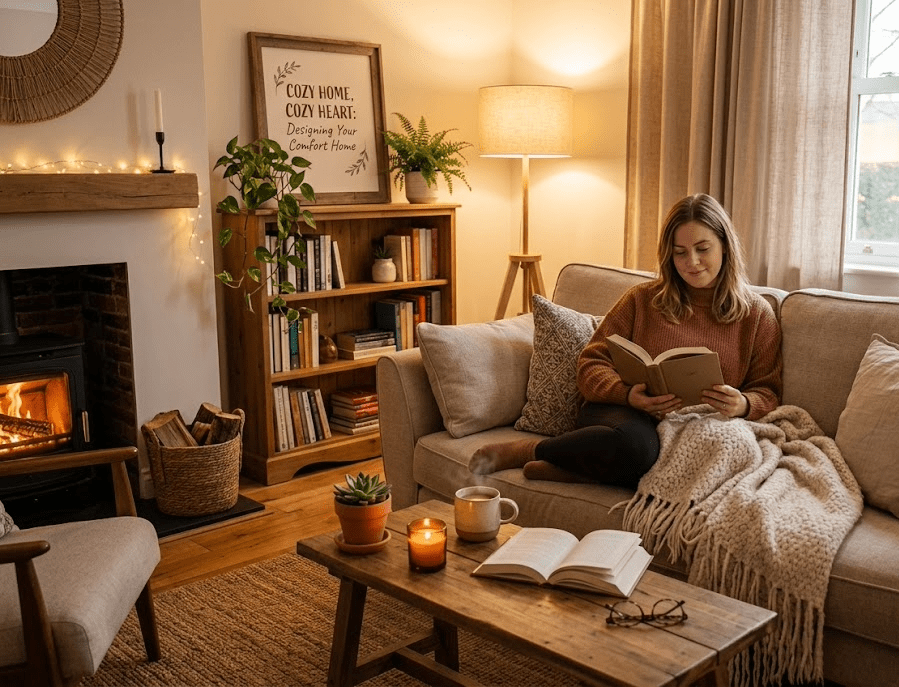
Cozy home, cozy heart: when your surroundings support the way you want to live, coming home becomes part of the comfort.